This is our home city
Our shop is on Product Lane in Huntington Beach, which means we are ten minutes from most jobs here and we know exactly what the salt does to a system on this side of the county. We service more Huntington Beach systems than any other city, and a large share of that work is replacing fixtures somebody else installed four years ago.
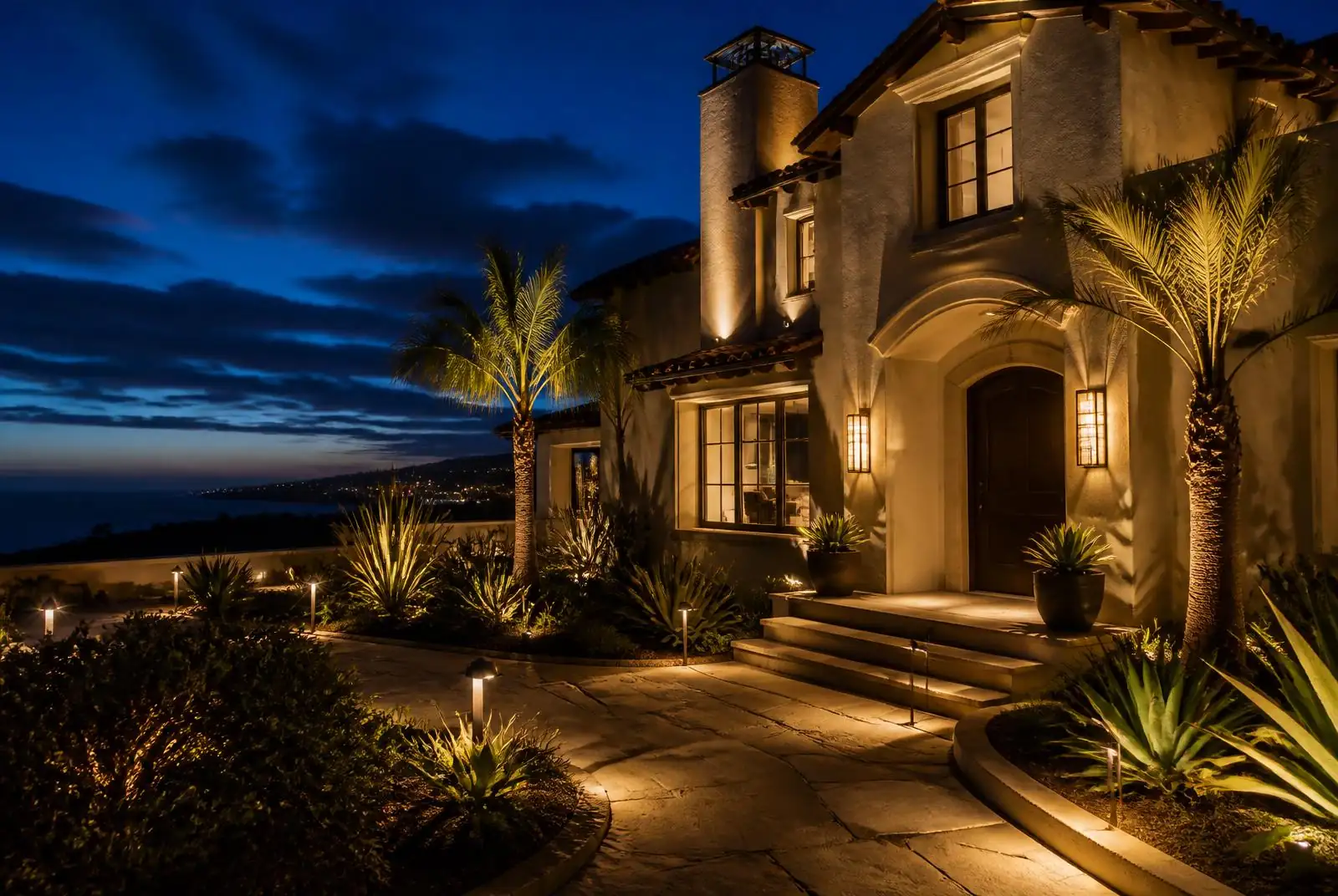
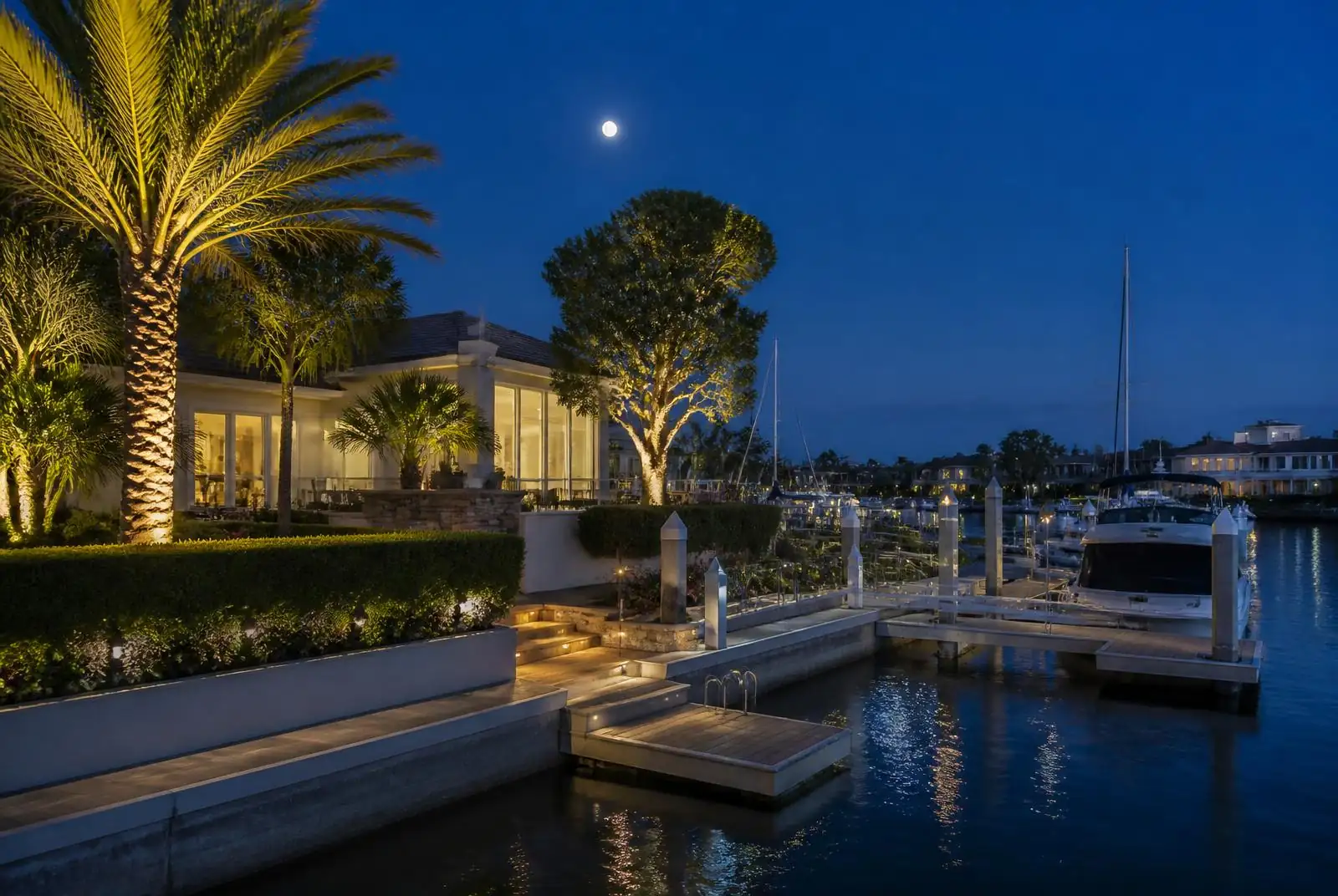
Architecturally the city runs from Huntington Harbour waterfront customs and Seacliff two-story Mediterraneans down to the beach-close cottages and the mid-century tracts inland of Beach Boulevard. Each needs a different hand: the harbour homes need dock, seawall and rear-elevation work; Seacliff needs facade grazing and mature-tree uplighting at scale; the older inland tracts get the biggest visual jump from simple, well-aimed front-yard layering.
Salt air is the whole engineering problem
Huntington gets a steady onshore breeze nearly every afternoon and heavy marine layer most mornings. That combination keeps a salt film on everything within a mile and a half of the sand. It attacks three things in a lighting system: the fixture body, the socket, and the wire splice.
We solve all three. Bodies are solid cast brass, not painted aluminum — brass patinas and keeps going. Sockets are sealed integrated LED modules or ceramic bases with a gasket, so the salt film cannot bridge the contacts. Splices are silicone-filled waterproof connectors, never wire nuts and never electrical tape, and we bury them in a serviceable location instead of under a shrub root. Transformers are stainless, mounted on a non-salt-facing wall with a proper drip loop.
Sand is the fourth factor everyone forgets. Fine sand blows into an unsealed lens channel and grinds the gasket. We use tempered glass lenses with captured seals and check them at every maintenance visit.
Harbour, patio and entertaining lighting
Huntington Harbour properties are used from the water side, so the rear elevation, the dock and the seawall matter as much as the street view. We light dock edges and steps with shielded downward optics for footing, keep everything at 2700K so it reads warm against the water, and control glare so the reflection off the channel does not blast the neighbor across the way.
Inland, most of our Huntington work is about making the back yard usable year-round: patio cover downlights, step and grade-change lighting, pool-perimeter safety light, and string lighting over the entertaining area on its own dimmable zone. It is the difference between a yard you look at and a yard you sit in in February.
Neighborhood notes
- Huntington Harbour
- Dock, seawall and rear-elevation lighting with the harshest salt exposure in the city.
- Seacliff
- Two-story Mediterranean facades and mature trees; HOA submittals prepared and filed.
- Downtown / Beach-close
- Compact cottage lots — tight beams, shielded optics, minimal spill onto the sidewalk.
- Edwards Hill
- Sloped lots with view corridors that need low-glare, layered terrace lighting.
- SeaCliff on the Greens
- Fairway-facing rear yards where low-output rear lighting keeps the sightline clean.
A recent Huntington Beach project
Before
A Huntington Harbour rear elevation with a single 150-watt floodlight on the patio, corroded aluminum path lights leaning at angles, and a dock you needed a flashlight to walk after nine.
After
Brass path and step lights along the dock run, two shielded downlights under the patio beam, warm 2700K throughout on a dimmable entertaining scene, and the flood gone. Total load dropped, usable hours doubled.
See more before-and-after projectsSchedule a consultation
We meet you at your Huntington Beach property after dark, set up real brass fixtures and show you the finished look before you spend anything.
Schedule my consultation