
HOA & community
HOA Landscape Lighting in Orange County
Common-area lighting for associations that need even coverage, clean documentation and a system that is cheap to keep running — built and serviced by our own dedicated local team.
Common areas, entries and monuments
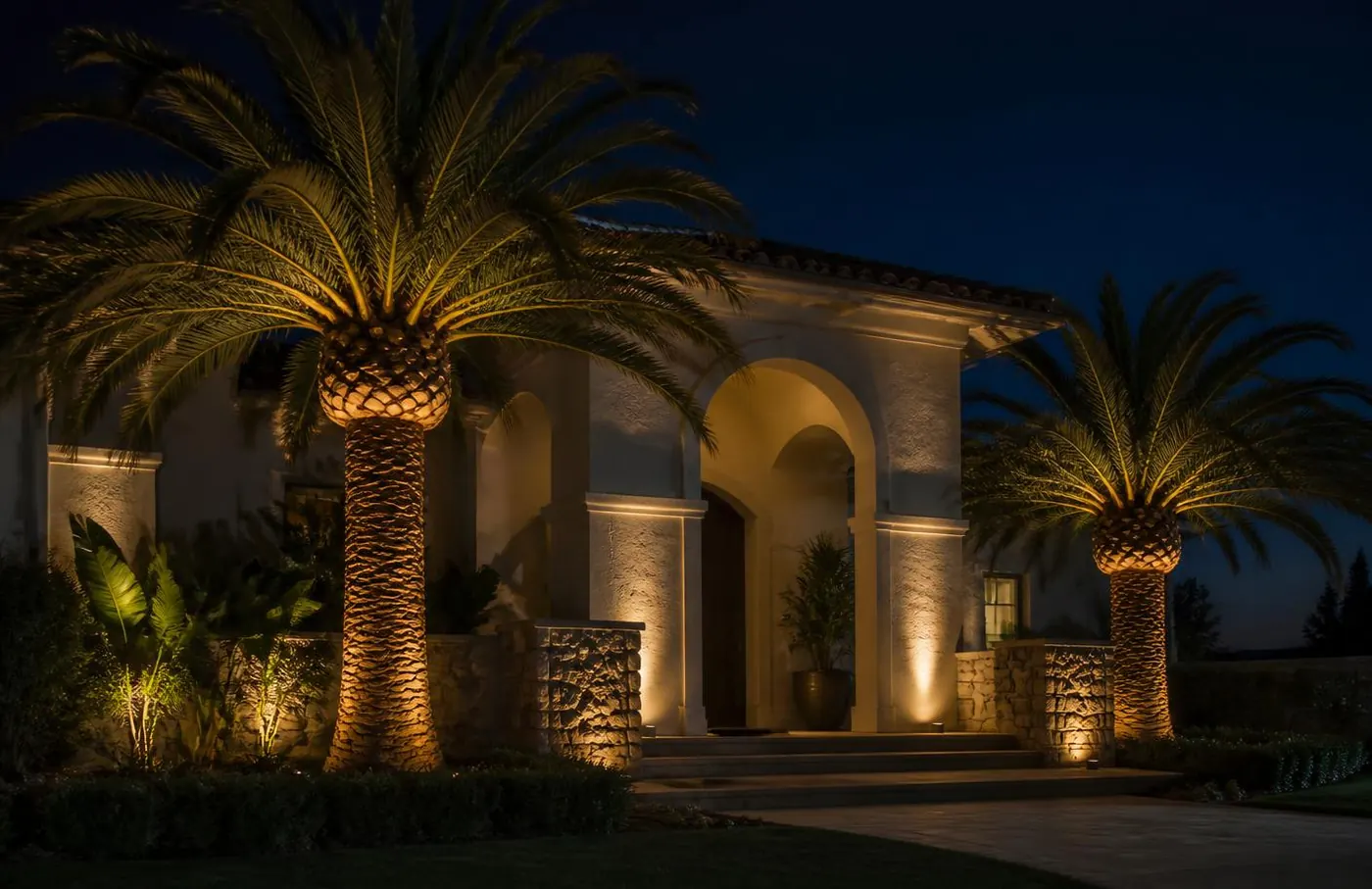
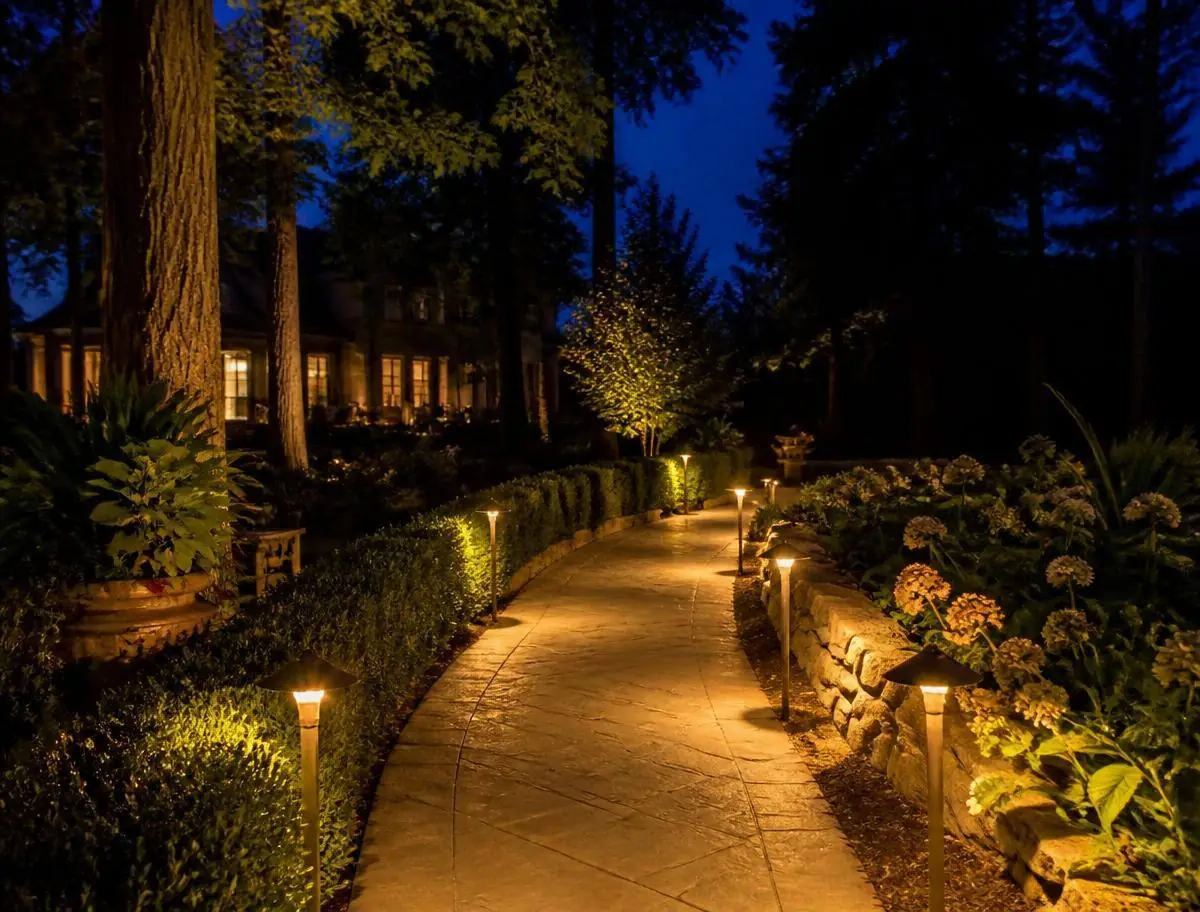
Entries, monument signs, greenbelts, pools and walkways lit to even coverage — no dark gaps on stairs or grade changes, and nothing glaring into windows.
- Entry and monument lighting that reads from the street
- Walkway and stair coverage designed for liability, not just looks
- Shielded fixtures aimed away from homes and bedrooms
- One warm color temperature across the whole community
Built for the board approval process
We know how associations actually approve work. Every proposal arrives board-ready, and we attend the meeting when it helps the vote.
- Board-ready proposals with drawings, fixture specs and photometrics
- Certificates of insurance and contractor's license #901505 with every bid
- Phased scopes so large projects can be spread across budget years
- As-built documentation and fixture schedules handed over at completion
For a board submittal, we use the same fixture-by-fixture drawing produced during landscape lighting design, so the reviewers see the actual layout, fixture types and color temperature.
Audits and maintenance contracts
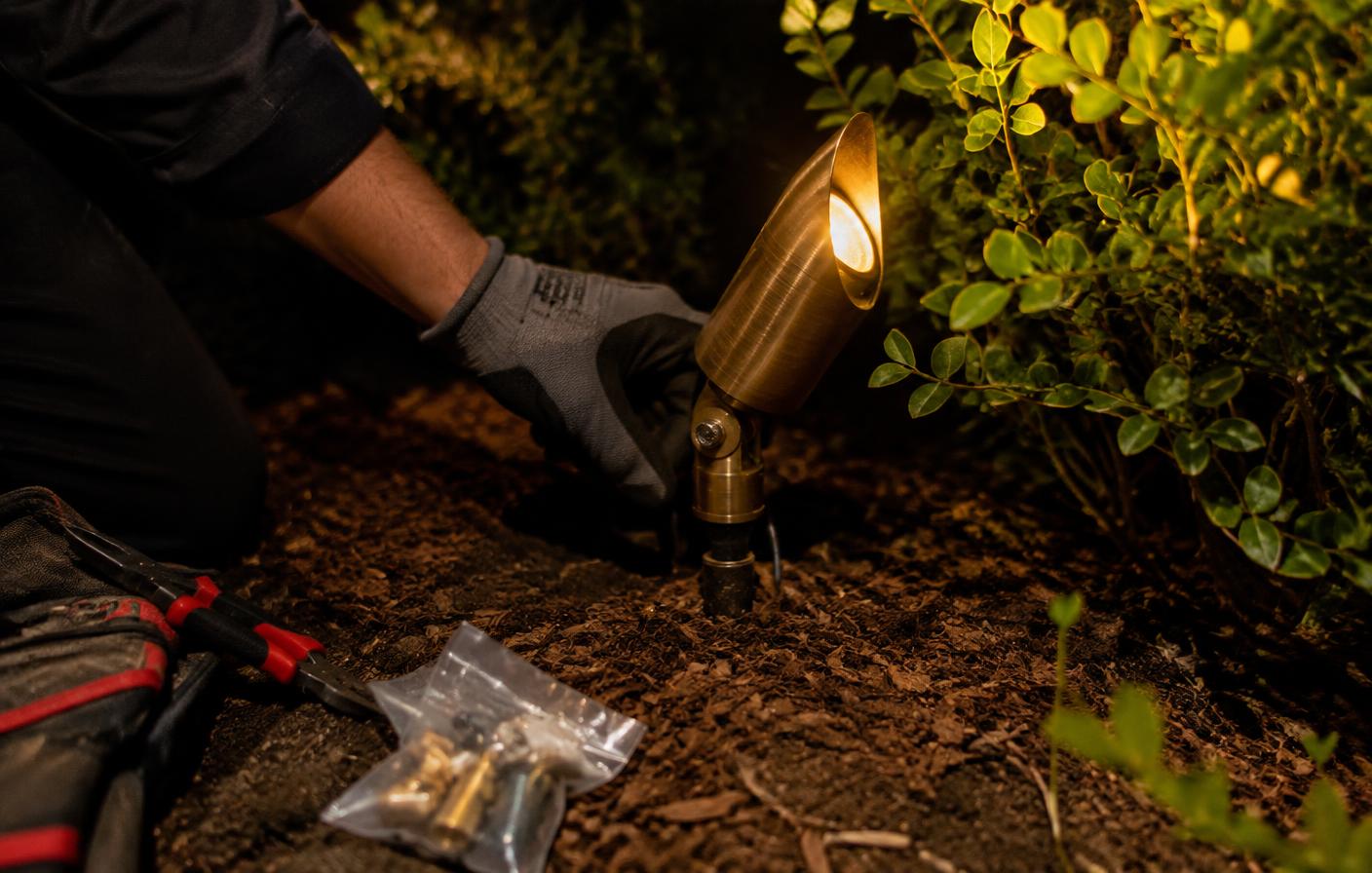
A community system is only as good as its second decade. We audit existing systems fixture by fixture, then keep them running on a scheduled contract with reporting after every visit.
- Full-system audit: every fixture tested, mapped and photographed
- Prioritized repair list so the board can fund work in order
- Quarterly or annual maintenance contracts
- Written report to the property manager after each service visit
Community lighting
Entries, monument signs, paths and parking approaches
Common-area lighting starts with the routes residents and visitors actually use. The community entry and monument sign should be readable after dark, while paths and changes in grade need a consistent rhythm of light. Parking approaches should connect naturally to those walking routes. Landscape lighting is part of that larger picture, not a reason to assume every existing parking-area fixture can be replaced by a low-voltage garden light. We identify the areas in the proposed scope and explain how the landscape lighting relates to the rest of the property before the board approves the work.
Shielding and aiming matter as much as fixture placement. A light that looks attractive from the street can still shine into a nearby home or create glare when a resident walks toward it. We plan the view from both directions, keeping one warm color temperature across the community and making the entry, shared paths and planted areas feel connected. Pools, greenbelts and gathering spaces can be included in the same review. The aim is useful, even coverage with landscape accents, not a brighter fixture at every possible location.
Community lighting
From proposal to approval, installation and scheduled care
The board and property manager start with a property walkthrough and a defined scope. We prepare a proposal with drawings, fixture specifications and the documents needed for vendor review. The board can compare priorities, ask questions and consider a phased scope if the full project needs to be spread across budget years. We attend a meeting when it helps explain the work, but the association makes its own approval decision. The written proposal should be the reference for that decision, not an informal collection of promises made during a walkthrough.
After approval, the installation follows the agreed scope. At completion, as-built documentation and fixture schedules become part of the property’s maintenance file. We then agree on the maintenance schedule so the manager knows when the installed areas will be tested and serviced. Commercial maintenance uses a one-year agreement, with the covered work and visit frequency set out in writing. Annual, bi-annual or quarterly visits are available to discuss. Reporting after each service visit keeps the manager informed about completed work and any repairs that still need approval.
Community lighting
LED retrofits for aging community systems
An aging lighting system does not always need a complete replacement. We test and map the existing fixtures before deciding which parts can be retained. A sound fixture body may be worth keeping, while failed connections, unsuitable lamps or transformer problems need attention before an LED conversion will perform consistently. The audit gives the board a prioritized repair list rather than treating every dark fixture as the same problem. It also separates immediate service work from optional changes to the lighting layout, helping the association make a clear budget decision.
LED retrofit planning includes lamp compatibility, transformer condition and the appearance of the completed system. Mixing color temperatures or replacing lamps without checking the circuit can leave the community with inconsistent results. We review the system as a whole and explain the recommended scope in writing. Retrofit pricing is based on an hourly rate plus materials furnished; the property must be assessed before a meaningful quote can be given. Where an existing fixture is no longer serviceable, replacement can be identified separately instead of being hidden inside a promise to convert everything.
Resident projects
Architectural-review support for resident lighting projects
A resident’s private lighting project and an association’s common-area project follow different approval paths. When a homeowner hires us directly, the fixture-by-fixture lighting layout can also support the association’s architectural review. Counts, fixture types and aiming notes help explain what will be installed and how glare will be controlled. We prepare submittal information for resident projects in Irvine, Ladera Ranch, Rancho Santa Margarita and Laguna Niguel. Requirements vary by association, so the homeowner should provide the current review instructions rather than assume that a neighboring community uses the same rules.
Review preparation is not a guarantee of approval. The association decides whether the proposed work meets its requirements, and any requested revisions should be reflected in the final scope before installation. A clear lighting plan makes those discussions more practical: the board can see the intended fixture positions and the homeowner can understand what is included. Our city hubs provide local landscape-lighting context for these communities. For shared-property work, the dedicated commercial page explains the bid documents, as-built handover and one-year maintenance agreement in more detail.
For office parks, retail and restaurants as well as associations, see our commercial landscape lighting service. For ongoing system care, compare our maintenance plans.
Questions
Frequently asked questions
- Do you attend HOA board meetings?
- Yes, when it helps. We present the proposal, answer the board's technical questions about fixtures, coverage and maintenance, and leave documentation the board can vote on without us in the room. Proposals include drawings and fixture specifications so every board member sees the same plan and the same fixed price.
- Can you take over an existing community lighting system?
- Yes. We start with a full audit in which every fixture is tested and mapped. The association then receives a prioritized repair list and an ongoing maintenance schedule with reporting after each visit, so the board always knows what was fixed, what still needs attention, and what it will cost before approving the work.
- How do you handle billing for associations?
- We invoice through the management company on whatever cadence the association already uses. Certificates of insurance and our contractor's license, CA #901505, come with every bid, so the management company has what it needs for vendor approval without chasing paperwork. Pricing is a fixed written quote, not hourly billing.
- Can homeowners in our community hire you directly?
- Yes. When a homeowner hires us, we prepare the architectural submittal for the association's design review as part of the job. Our fixture-by-fixture layout with counts, types and aiming notes doubles as the submittal, which is usually the slowest step for a homeowner trying to get lighting approved on their own.
- How long have you been lighting Orange County communities?
- Orange County Night Lights is family-run and has served Orange County since 2002. We are based in Huntington Beach and work in master-planned communities across the county, including handling HOA and architectural submittals. The same local crew that installs a system also services it, so the association deals with one contractor.
Schedule a Consultation
Request a board-ready proposal
Tell us the community and the scope — we will walk the property and bring a proposal your board can actually vote on.
Orange County since 2002 · Local crew · No obligation
Keep exploring