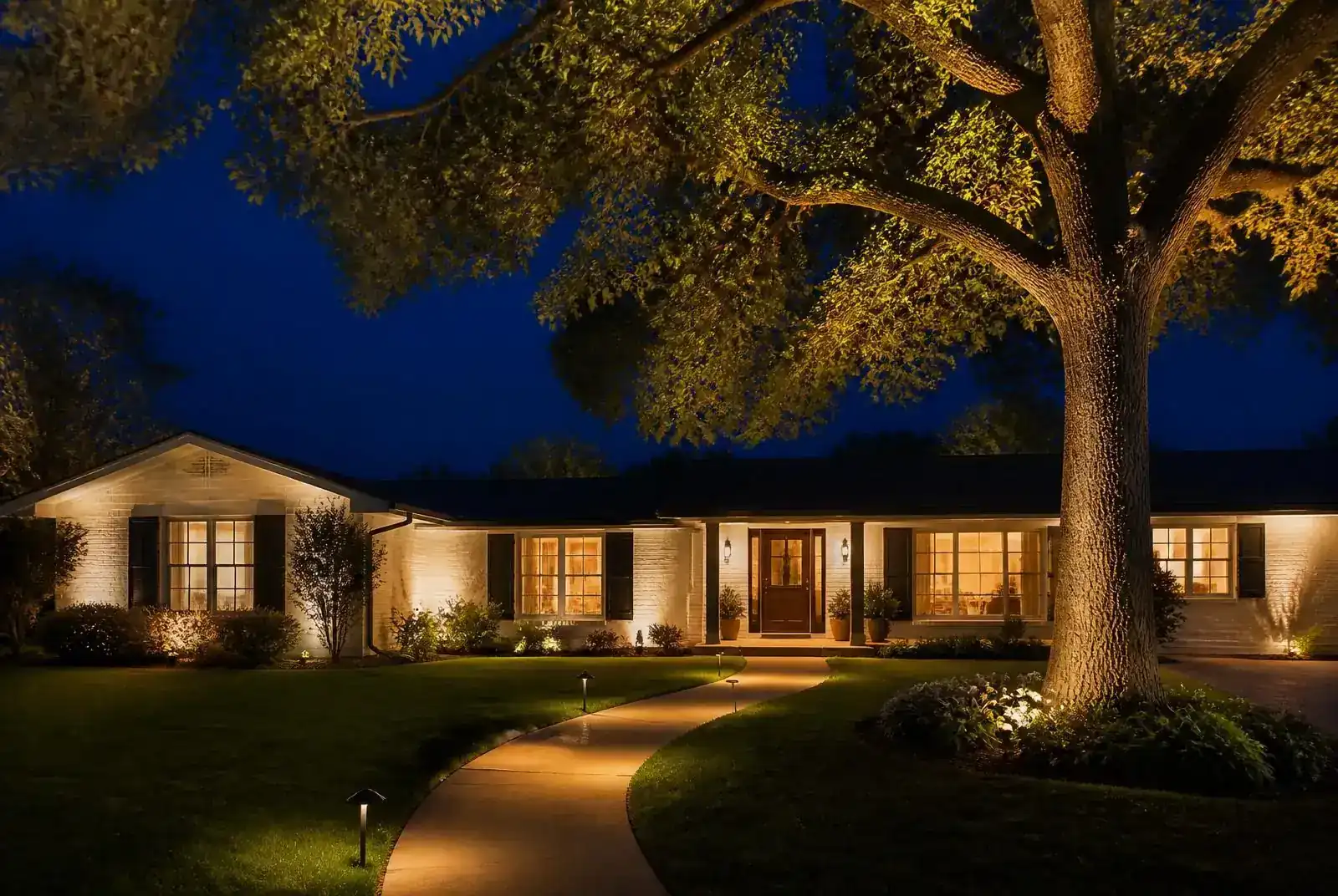
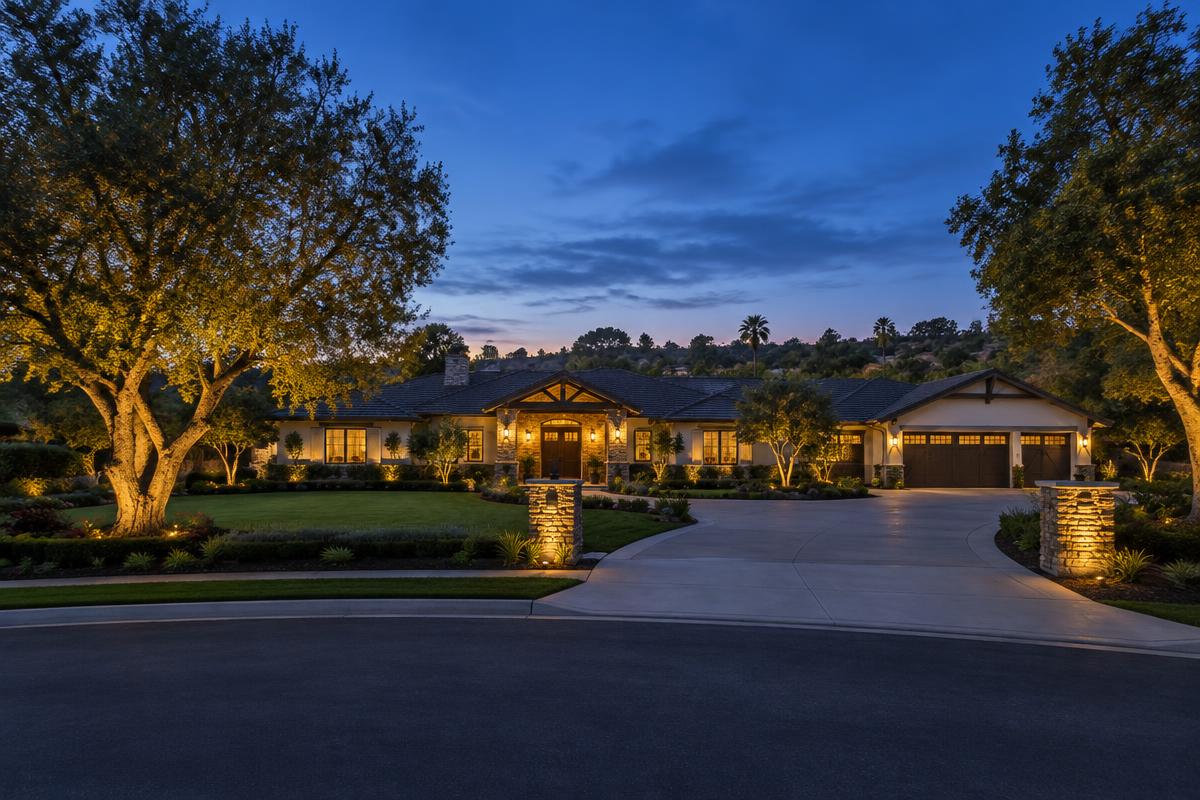
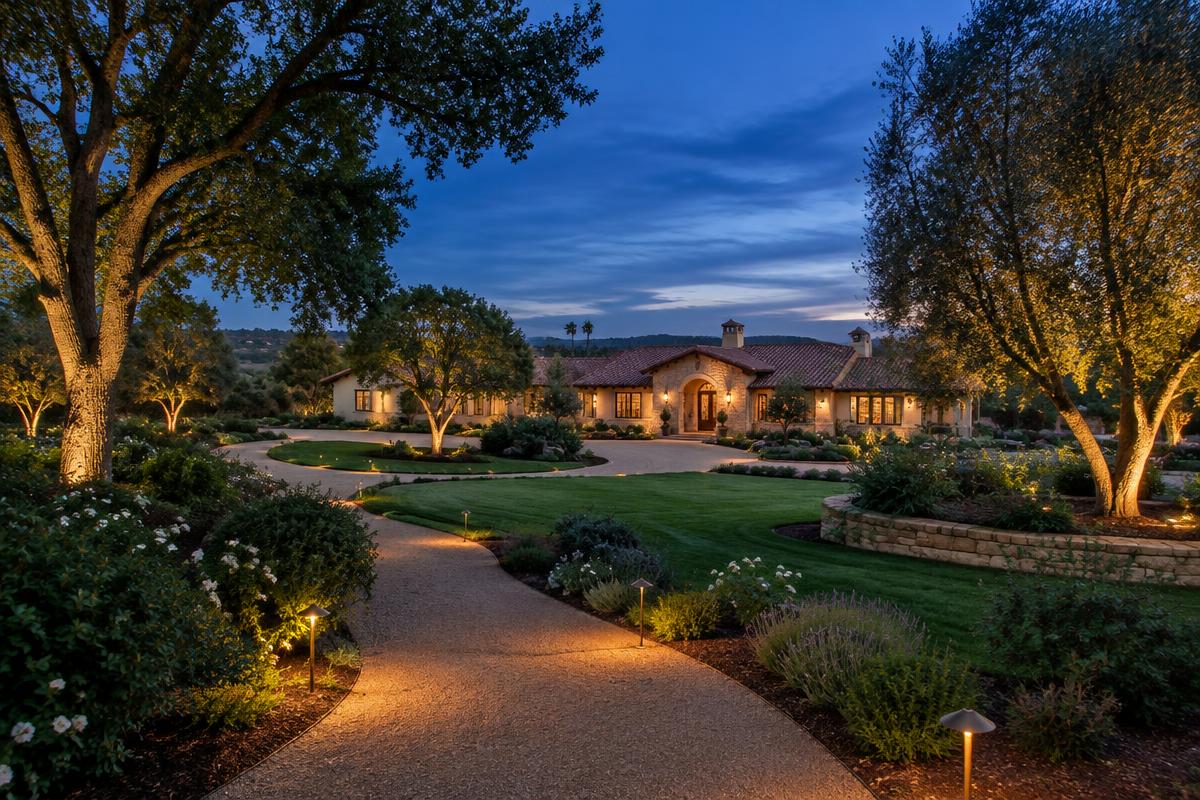
Yorba Linda's ranch-scale properties give a lighting design room to unfold. Deep setbacks, broad frontages and longer drives mean the first view of the house may happen well before someone reaches the entry. We treat the approach, planting and front door as related layers, rather than trying to cover every surface with one bright source. That sequence can make a large property feel welcoming without flattening its landscape. A circular drive, for example, calls for a different arrangement from a short straight walk. Entry pilasters may need their own accents, while trees provide a softer background behind the approach. We walk the arrival route after dark and look back toward the street, so the design considers both the arriving guest and the view from the house. The layout follows those sightlines rather than a standard fixture spacing.
Distance affects the electrical plan as much as the appearance. A fixture near the back of the garden should not look weaker simply because it sits farther from the transformer. Transformer sizing, wire runs and hub placement are planned together so distant lights receive the voltage they need. Buried, serviceable connections also make it practical to maintain the layout instead of rebuilding it when a splice needs attention. If you want to light the front first and the backyard later, that final arrangement can be planned from the start. Leaving capacity for the later phase helps avoid replacing equipment simply to extend the scene. An existing system needs a different assessment: we trace failed connections, check the transformer and compare lamp colors before deciding which parts need repair or replacement.
Mature pepper trees, oaks and citrus can anchor the nighttime scene. The useful question is not only how tall a tree is, but which part of it you want to see from the driveway, patio or house. A beam aimed through the branching structure creates a different effect from a broad wash on the canopy. We compare those choices after dark with real fixtures before settling the design. Garden growth can change that effect over time, even while every lamp still works. Leaves block a beam, a gardener shifts a fixture, or mineral deposits reduce the light through a lens. Bi-annual or quarterly service is available to keep aiming and cleaning on a schedule. That lets the landscape evolve without losing the balance between the lit trees, garden paths and quieter portions of the yard.
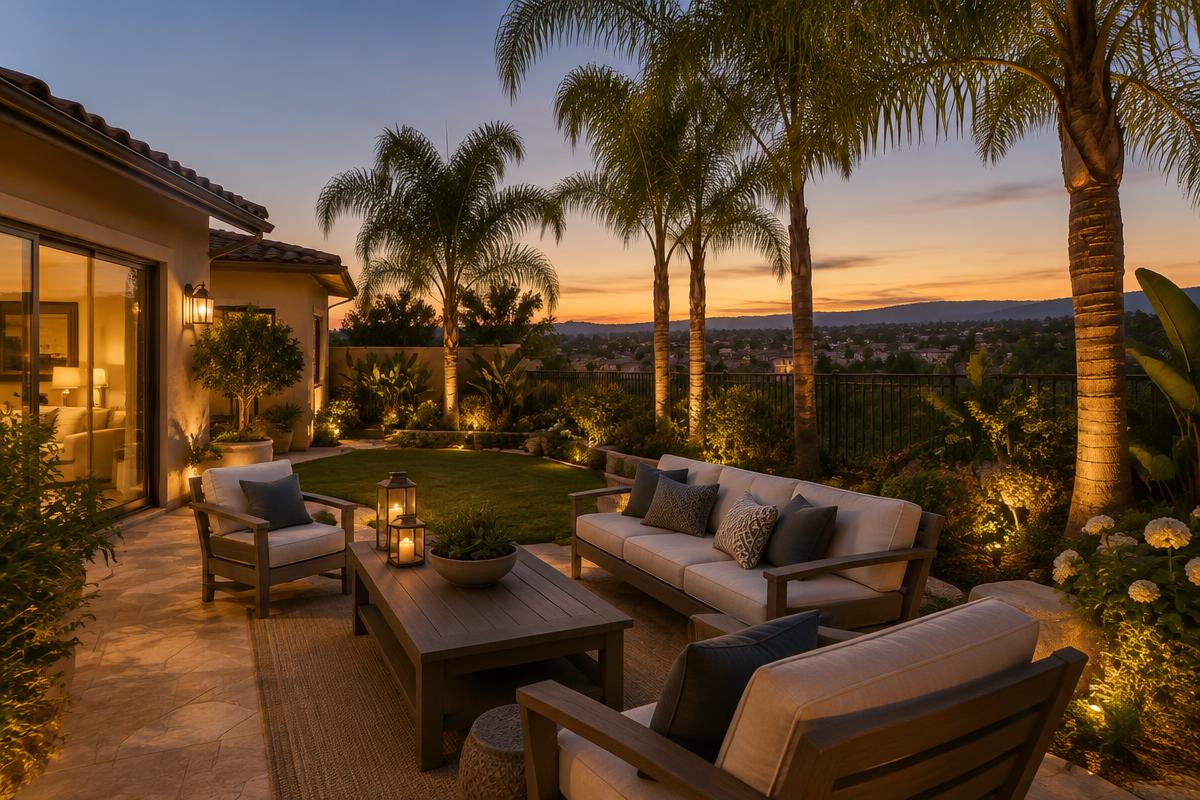
HOA communities add another layer of planning. Where your association requires a review, we prepare fixture specifications and the layout for its architectural submittal and wait for approval before installation. Backyard lighting also needs restraint along boundaries facing neighbors, trails or open space. Warm, shielded lighting on the usable portions of the property keeps the emphasis on your garden, with timers and controls arranged around the evening scene. Patio seating should be evaluated at seated eye level, not only from the lawn. Lighting a tree beyond the patio can provide a comfortable backdrop without a bright lamp facing the chairs. We review those views during the demo and include the selected areas in your fixed quote. The example projects show possible scopes, but the final fixture count comes from your property and priorities.